Published on May 01, 2026
Diesel And Petrol Prices in Pakistan Increased
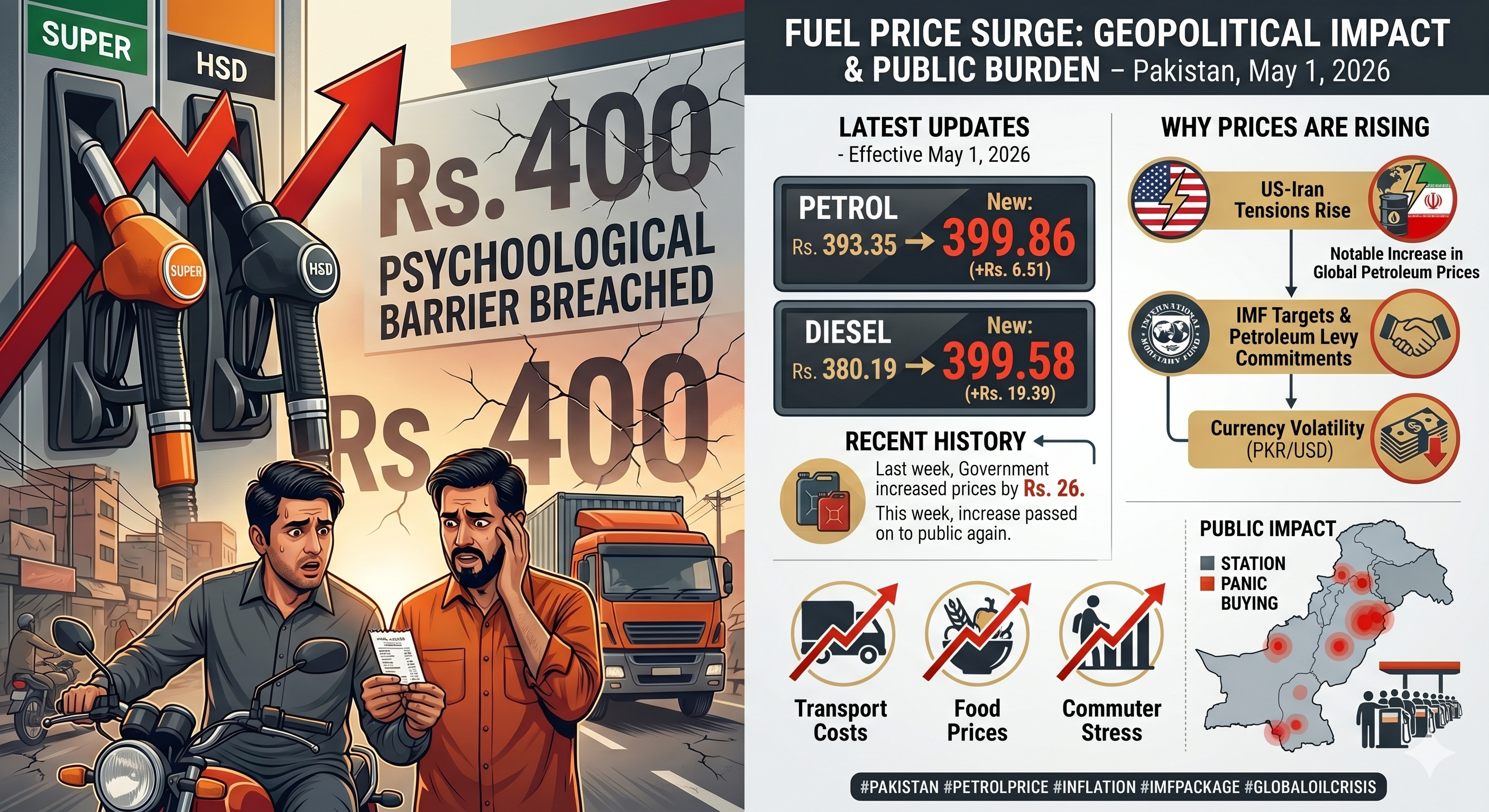
The inflation fire in Pakistan just got more fuel—literally. As of today, May 1, 2026, the federal government has officially implemented another significant hike in petroleum prices, pushing the rates of both petrol and diesel toward the psychological barrier of Rs. 400 per litre.
Here is a detailed breakdown of the latest price revision and what it means for the average Pakistani.
⛽ The New Price Chart (Effective May 1, 2026)
Following a notification from the Petroleum Division, the ex-depot prices have been adjusted as follows:
Product Old Price (Rs.) New Price (Rs.) Increase (Rs.)
Petrol (Super) 393.35 399.86 +6.51
High-Speed Diesel (HSD) 380.19 399.58 +19.39
Kerosene Oil 365.21 360.76 -4.45 (Decrease)
Note: While petrol and diesel saw a jump, Kerosene oil provided a small relief with a decrease of over Rs. 4 per litre.
🔍 Why Are Prices Rising Again?
This isn't just a domestic decision; it's a "perfect storm" of global and local factors:
1. The "Strait of Hormuz" Crisis
Global energy supply routes are currently under immense pressure. Ongoing geopolitical tensions in the Middle East have led to disruptions in the Strait of Hormuz, a vital waterway for global oil shipments. This has sent Brent crude benchmarks soaring, at one point touching $126 per barrel.
+1
2. IMF Targets & Petroleum Levy
To secure the disbursement of over $1.2 billion from the IMF (expected at the May 8th board meeting), the government has committed to strict fiscal targets. This includes meeting a massive Rs. 1.468 trillion petroleum levy target. To achieve this, a new levy of Rs. 28.69 was imposed on Diesel, which previously had a zero-levy status.
+1
3. Currency Volatility
Despite some stability, the exchange rate remains a sensitive factor. As the cost of importing refined fuel rises in dollar terms, the PKR cost at the pump inevitably follows.
📉 Impact on the General Public
The ripple effect of this hike will be felt across all sectors:
Commuters & Motorcyclists: With petrol at nearly Rs. 400, the daily commute for the middle class has become a luxury.
The Food Basket: High-Speed Diesel is the backbone of the transport sector. When diesel prices rise by nearly Rs. 20, the cost of moving vegetables, grains, and FMCG goods from farms to cities increases, leading to "transport-induced inflation" at grocery stores.
Panic Buying: Following the announcement last night, major cities like Islamabad and Lahore saw long queues at fuel stations as citizens rushed to fill their tanks before the midnight deadline.
💡 What Can You Do?
While we can't control the global oil market, we can manage our consumption:
Carpooling: Coordinate with colleagues or neighbors for daily commutes.
Maintenance: Ensure your vehicle’s tires are properly inflated and the engine is tuned; poor maintenance can drop fuel efficiency by 10-20%.
Avoid Idling: In heavy traffic, turn off your engine if you're stopped for more than 30 seconds.
Final Thought:
With petrol and diesel both sitting on the edge of the Rs. 400 mark, the coming weeks will be challenging for the Pakistani economy. All eyes are now on the upcoming IMF board meeting and the hope that global supply routes reopen to stabilize international prices.
How is this price hike affecting your monthly budget? Share your thoughts in the comments below.
Tags
Petrol price in Pakistan today
Diesel price in Pakistan
New fuel prices Pakistan May 2026
Pakistan petroleum prices update.

